Commercial Kitchen Cooking Equipment: Improving Performance in Professional Foodservice Kitchens
- Get link
- X
- Other Apps

Commercial kitchens require more than basic appliances to operate efficiently. Restaurants, hotels, cafes, bakeries, and catering businesses depend on high-quality commercial kitchen cooking equipment to maintain consistent food preparation, improve workflow, and handle demanding service hours.
As the foodservice industry continues evolving, businesses are investing in advanced kitchen equipment designed for speed, durability, energy efficiency, and long-term performance. Modern commercial kitchen cooking equipment helps reduce operational challenges while supporting productivity and food safety standards.
Why Commercial Kitchen Cooking Equipment Is Essential
Professional kitchens operate in high-pressure environments where speed and consistency are critical. Reliable cooking equipment allows staff to prepare meals efficiently while maintaining food quality across every order.
Commercial kitchen cooking equipment helps businesses:
- Increase kitchen productivity
- Improve cooking consistency
- Reduce food preparation time
- Lower maintenance costs
- Improve workplace safety
- Support food safety compliance
- Reduce energy consumption
Well-designed kitchen equipment also helps staff work more efficiently during peak service hours.
Key Types of Commercial Kitchen Cooking Equipment
Every foodservice business has unique kitchen requirements depending on its menu and customer volume. However, several categories of equipment are commonly used across most commercial kitchens.
Commercial Ovens
Commercial ovens are among the most important appliances in a professional kitchen. They are used for baking, roasting, reheating, and preparing various menu items.
Common oven types include:
- Convection ovens
- Combination ovens
- Conveyor ovens
- Pizza ovens
- Deck ovens
Modern commercial ovens are equipped with programmable controls and advanced heating systems that improve cooking speed and consistency.
Commercial Ranges and Cooktops
Commercial ranges are designed for heavy-duty cooking applications such as boiling, frying, sautéing, and simmering.
Benefits of commercial ranges include:
- High heat output
- Multiple burners
- Precise temperature control
- Durable construction
Gas and electric ranges are available depending on kitchen preferences and operational requirements.
Griddles and Charbroilers
Restaurants serving burgers, breakfast foods, sandwiches, and grilled dishes often rely on griddles and charbroilers.
These appliances provide:
- Even heat distribution
- Fast cooking performance
- High-volume production capability
- Consistent grilling results
Charbroilers also create the signature grilled flavor that many customers enjoy.
Deep Fryers
Deep fryers are widely used in fast-food restaurants and casual dining kitchens. Modern fryer systems are designed to improve oil efficiency and maintain stable cooking temperatures.
Features may include:
- Fast heat recovery
- Oil filtration systems
- Temperature monitoring
- Energy-saving technology
Efficient fryers help reduce operational costs while maintaining food quality.
Refrigeration Equipment
Commercial refrigeration systems are critical for preserving ingredients and supporting food safety standards.
Important refrigeration equipment includes:
- Reach-in refrigerators
- Walk-in coolers
- Commercial freezers
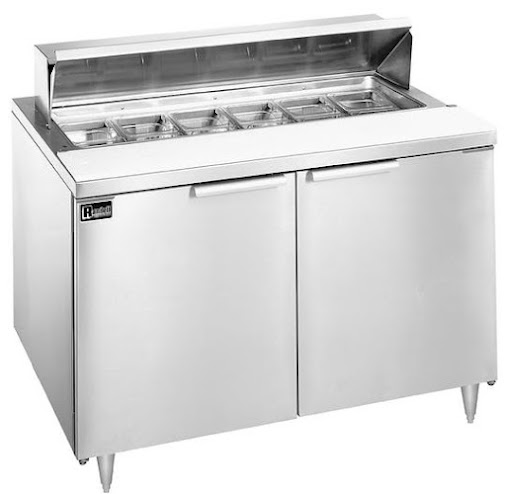
- Prep refrigerators
- Undercounter refrigeration units
Reliable refrigeration helps reduce food waste and improve kitchen organization.
Food Preparation Equipment
Food preparation equipment simplifies kitchen operations and reduces manual labor.
Common prep equipment includes:
- Food processors
- Commercial mixers
- Meat slicers
- Steamers
- Prep stations
These appliances improve kitchen efficiency and help maintain consistency in food preparation.
Benefits of Energy-Efficient Kitchen Equipment
Energy efficiency is becoming a major priority in the foodservice industry. Modern commercial kitchen cooking equipment is designed to reduce energy usage without compromising performance.
Energy-efficient equipment provides benefits such as:
- Lower utility costs
- Reduced heat generation
- Improved kitchen comfort
- Reduced environmental impact
- Long-term operational savings
Many appliances now include smart controls and automatic standby features that help optimize energy consumption.
Smart Technology in Commercial Kitchens
Technology is changing the way commercial kitchens operate. Smart kitchen equipment helps businesses improve productivity, monitor appliance performance, and reduce downtime.
Advanced technologies may include:
- Digital cooking controls
- Automated cooking programs
- Remote equipment monitoring
- Predictive maintenance alerts
- Smart ventilation systems
These features help kitchens operate more efficiently while improving food consistency.
Importance of Kitchen Workflow
A properly designed kitchen layout improves staff productivity and reduces unnecessary movement during service.
Efficient kitchen workflows support:
- Faster meal preparation
- Better communication between stations
- Safer work environments
- Easier equipment access
- Improved cleaning and sanitation
The placement of commercial kitchen cooking equipment plays a major role in maximizing operational efficiency.
Food Safety and Hygiene Standards
Food safety is essential in every professional kitchen. Commercial kitchen equipment should support easy cleaning and proper sanitation procedures.
Important safety considerations include:
- Stainless-steel construction
- Easy-to-clean surfaces
- Accurate temperature controls
- Proper ventilation systems
- NSF-certified equipment
Maintaining clean and hygienic equipment helps businesses comply with health regulations and protect customer safety.
Choosing the Right Commercial Kitchen Equipment
Selecting the right commercial kitchen cooking equipment depends on several operational factors, including:
- Kitchen size
- Menu requirements
- Customer volume
- Utility availability
- Budget
- Workflow design
Businesses should choose equipment that supports both current operations and future expansion.
Investing in durable and efficient appliances can reduce maintenance costs and improve long-term productivity.
Future Trends in Commercial Kitchen Equipment
The commercial kitchen industry continues to evolve with a growing focus on automation, sustainability, and smart technology.
Emerging trends include:
- Automated cooking systems
- Energy-efficient appliances
- Smart kitchen monitoring
- Compact multi-functional equipment
- Sustainable kitchen solutions
Modern commercial kitchens are becoming more technology-driven to improve performance and reduce operational challenges.
Conclusion
Commercial kitchen cooking equipment is a vital part of every successful foodservice operation. Professional-grade appliances help improve efficiency, maintain food quality, reduce energy costs, and support food safety standards.
From ovens and fryers to refrigeration and food preparation systems, the right equipment helps restaurants and commercial kitchens create more productive and organized work environments. Investing in reliable commercial kitchen cooking equipment allows foodservice businesses to operate more efficiently while meeting the demands of today’s competitive industry.
- Get link
- X
- Other Apps

Comments
Post a Comment